

Breaking Down the Cost of Eating Out
or, How to Spend Your Month's Food Budget in the First Week.

Sometimes after a long day at work, going home and realizing you and your partner actually ate all the leftovers can be soul crushing. Maybe one of you had a bad day and want something good to eat because of it. Or maybe you’ve been putting off going to the store and you really don’t want to make a meal with what you have on-hand.
Whatever the reason is — there’s going to be times where going out to eat for non-extravagant reasons just feels like the only option. I’m not here to deny that satisfaction, but I do want to develop a means of thinking about the real cost of pulling up your food app instead of pulling out your cutting board.
So how do you identify a good baseline meal to compare all the others to? I think sustainable meals look like this:
- healthy enough to eat most nights,
- should be affordable to make,
- shouldn’t take too much effort to prep.
For my taste, a good stirfry with chicken and vegetables plus some white rice is that baseline meal. It’s cheap, quick to make and my partner and I never mind eating them.
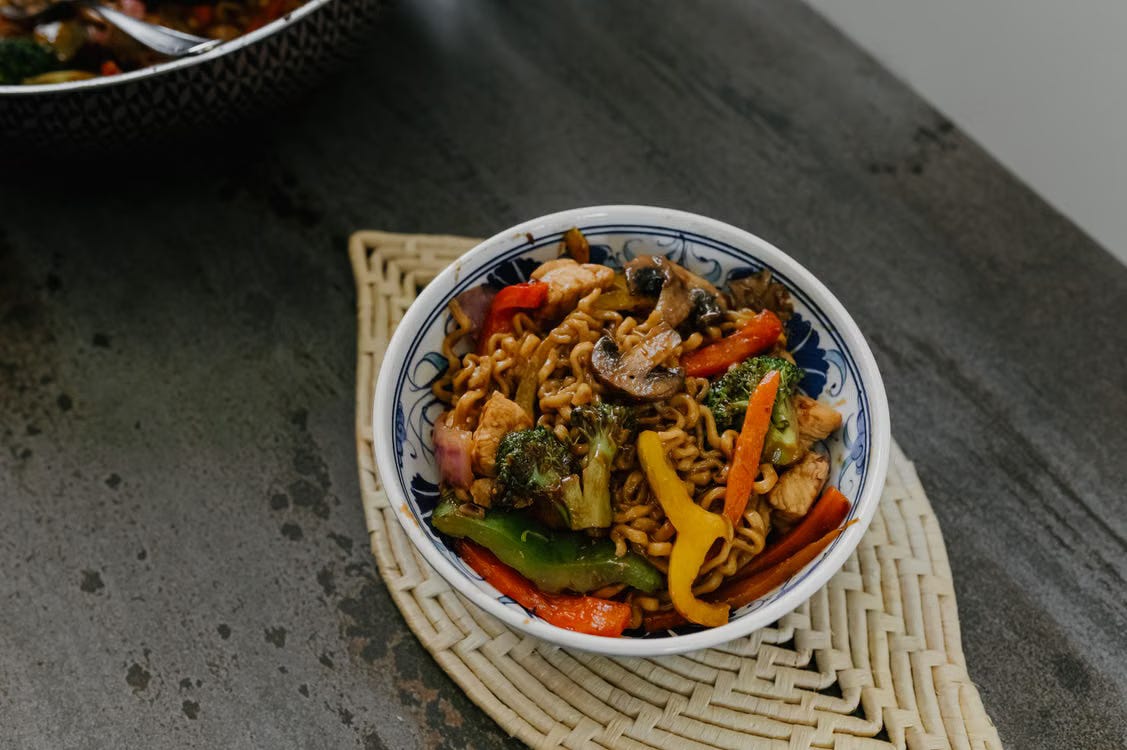
Home Cooking Tier (my stir fry) (1:1)
2lb of chicken breasts — $6
an equal amount of mixed veggies - $3
seasonings + white rice — $1 (that’s a highball estimate)
We get four meals when we make this — that’s $10 for a dinner and a lunch for each of us. Thus my baseline is $2.50 a meal.
To keep it clean, let’s say there’s 30 days in a month. Everyday needs a full lunch and dinner. For breakfasts, we often will nibble on a left over container, so let’s say breakfasts equal half a meal. By this logic, we’re looking at 75 meals a month that need accounting for.
75 x $2.50 is $187.5… let’s just call this $200. That’s no snacks, no trips out — just a months worth of eating under the most ideal circumstance.
Now let’s look at my credit card statement for this month. 20 meals purchased, $200 spent. Wow, that’s my whole budget spent in almost a quarter of the time! How did this happen…
The Ultra-Cheap Fast Food Tier (2.5:1)
McDonald’s — $75 spend across 12 trips
Unfortunately, the McDonald’s in our town far out-performs other fast food places in terms of speed, price and reliability. Because of this, they’ve become our go to spot — especially when we both share a day off and want to start our morning with a nice breakfast.
$75 across 12 meals averages to be about $6.25 a visit. That’s more than double what we spend at home, a two and a half to one ratio, in fact. Honestly, I don’t think this is a terrible price to pay. You could spend more on a meal at home simply by buying beef instead of chicken!
The frequency in which we visit is more of the problem. If we cut our trips by a third — say, we only said yes when we want breakfasts, not when we’re too lazy to cook — our fun little moments would feel more special while also cracking down on cooking at home. It’s a win-win that’d save about $50 per month!
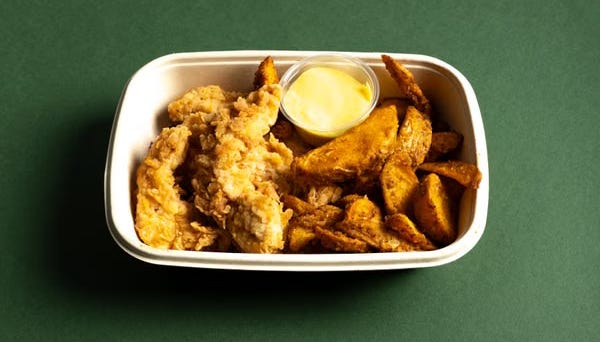
Gourmet Fast Food Tier (aka Fast Casual Dining, 6:1)
Raising Cane’s — $26*
Panda Express — $28*
*paying for two people’s meals
We only ate at these places once this whole month and while they hit the spot in a damn-fine manner, I’m realizing now that just those 2 meals were more than a 1/4th of the entire month’s food budget. Those were great chicken strips but jesus christ…
Meals like this really ought to be slotted into the ‘entertainment’ budget. We’re not eating here because we need sustenance, we’re enjoying a moment in time. The problem with putting a $26 meal for two in the entertainment category is that the cost could fund a lot more than 30-min’s of entertainment.
Immediate things that come to mind you could buy instead:
Two movie ticket // you’ll get thrice the duration of entertainment and walk away with a story to talk about!
Half the cost of a decent board game // if you play it twice, you broke even. Every round after that is free!
Two copies of an indie co-op game // when I bought Phasmophobia for $10, I didn’t image I’d get 100+ hours out of it. Relatively speaking, buying Phasmo versus eating at Cain’s is a 200:1 value differential.
The ‘Just Learn to Cook…’ Tier (7:1)
Local Asian buffet — $34*
Local Mexican restaurant — $37*
*paying for two people’s meals
Food can be an experience, but the crappy restaurants just ain’t cutting it, chief.
You know the place — the restaurants everyone wants to go to but you only say yes because you want to be social. Welp, I’m here to tell you you don’t need to patronize these places if they aren’t giving you that real fine-dining experience you want. So many restaurants exist these days because people who work in boring cities working boring jobs just want a little entertainment. They’re like casual drinking but for middle-aged people. They’re fun in the moment, then when you’re done you think ‘dear god, why did I put so much time into that…’
If places like this intrigue you, go learn to cook — I swear to god, it’s that simple. If you start by spending seven times more than your most basic home cooked meal and slowly work that number down, you’ll be saving money in the long run.
This category is like the one above except you’re trading off the ‘ready in 5 minutes’ convenience for having a server that you never really want to bother (but you should still tip them at least 20%.)
So how much could I be saving?
We already know that a perfect month is $200. Realistically though, you’re going to be spending a lot more because of snacks, drinks, one off items. This doesn’t even touch how much money cutting out drinking can save. But that’s okay, I’d say give yourself a 150% wiggle room. Let yourself spend $300 a month on food — say yes to the luxury items at the store a little more often if it means you’ll be staving off even a single meal out to eat. After you’ve had your moments of learning, try to dial it back.
But let’s get to the final math problem — 75 meals minus the 20 I went out to eat, that’s 55 meals. 55 x $2.50 ~= $140. Add the $200 from going out & our new total is $340 a month. If your number is anything like mine, just remember we already have the frame work in place to save at least $140 a month just from food! Imagine baseline food cost decreased - the savings would be even larger!
My goal for writing this was just to figure out where my money was going. Now that I’ve got it pretty visualized, I think I’m going to start buying that steak a little more often and eating that bean and bacon soup a little more often, too!